GeM CRAC & Delayed Payments: How to Get Paid Faster by Government Buyers
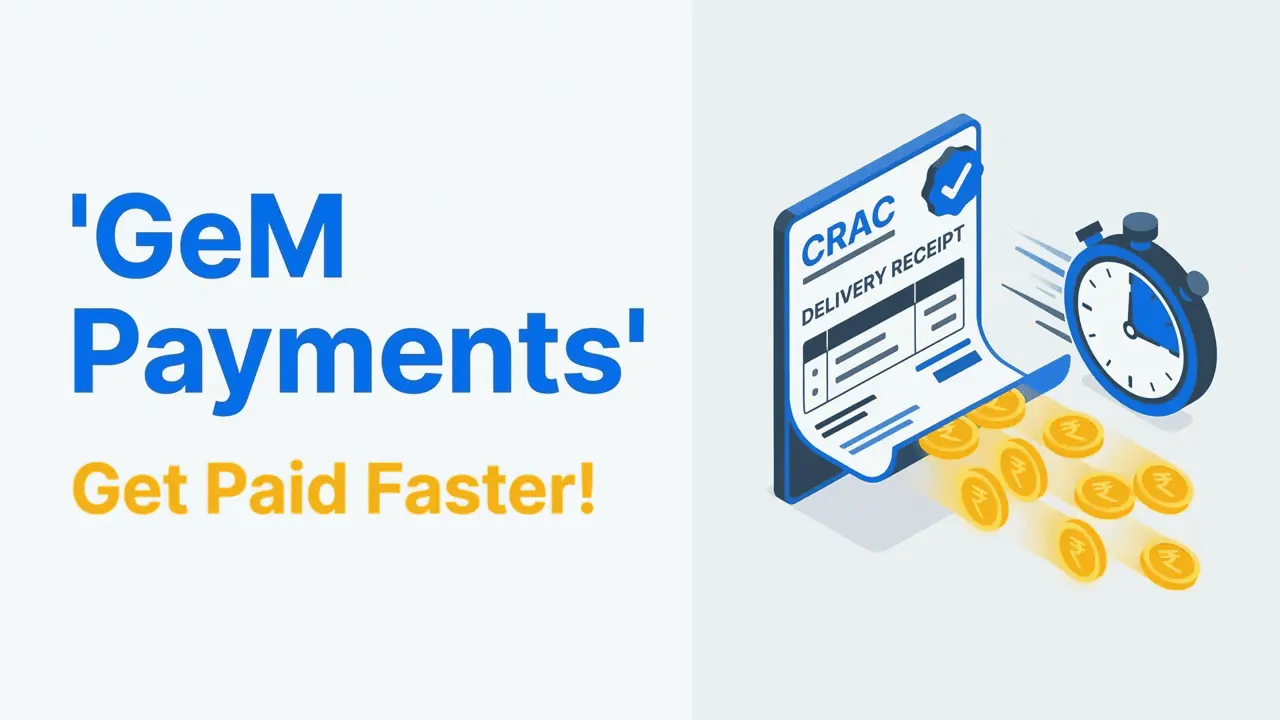
For many vendors working with government departments, delayed payments are one of the most frustrating challenges. Even after successfully supplying goods or completing services, vendors often face long waiting periods before receiving payment.
On the Government e-Marketplace (GeM), the payment process is closely linked to an important document known as the Consignee Receipt and Acceptance Certificate (CRAC). Understanding how this process works can help vendors significantly reduce payment delays and maintain healthy cash flow.
In this guide, we explain what CRAC is, why it is important, and how vendors can ensure faster payments through the GeM platform.
What is CRAC on GeM?
The Consignee Receipt and Acceptance Certificate (CRAC) is a digital confirmation issued by the buyer or consignee after receiving and verifying the supplied goods or services.
This certificate confirms two critical things:
- The goods or services have been delivered successfully.
- The buyer has accepted the delivery as per the contract terms.
Once the CRAC is generated on the GeM portal, the payment process can officially begin.
Why CRAC is Critical for Vendor Payments
CRAC acts as the trigger for payment release on the GeM platform.
Without CRAC approval, the system cannot initiate payment to the vendor.
This means that even if you have completed delivery perfectly, payment will not move forward until the buyer completes the CRAC process.
Therefore, vendors must actively track CRAC status after delivery.
Timeline for CRAC Generation on GeM
The GeM platform has defined timelines that buyers must follow when verifying deliveries.
After goods or services are delivered, the consignee must:
- Inspect the delivery
- Confirm receipt
- Generate the CRAC on the GeM portal
If no objection is raised within the specified inspection period, the system may automatically move forward with the process depending on the contract terms.
However, delays often occur when buyers do not complete this step promptly.
Common Reasons for Payment Delays on GeM
Many vendors face payment delays due to process gaps rather than system issues.
Common reasons include:
- Buyer delays in generating CRAC
- Incorrect delivery documentation
- Incomplete invoice details
- Mismatch between order and supplied items
- Pending inspection by consignee
Understanding these issues helps vendors prevent unnecessary delays.
What is the GeM Pool Account (GPA)?
The GeM Pool Account (GPA) is a payment mechanism designed to make vendor payments more efficient and transparent.
Under this system, buyers deposit funds into a centralized GeM pool account when placing orders.
Once the CRAC is generated and the invoice is verified, the payment is released to the vendor directly from this account.
This system reduces dependency on individual department payment processes and improves transparency.
What is GeM Sahay?
GeM Sahay is a financing solution that helps vendors receive early payments against confirmed government orders.
This program allows vendors to obtain working capital financing from participating financial institutions.
Key benefits include:
- Faster access to funds
- Improved cash flow for businesses
- Reduced financial pressure during project execution
This option can be particularly helpful for MSMEs that need liquidity while waiting for government payments.
Best Practices to Ensure Faster Payments on GeM
Vendors can take several proactive steps to minimize payment delays.
- Ensure accurate delivery documentation
- Upload invoices correctly on the GeM portal
- Maintain communication with the consignee
- Track CRAC generation regularly
- Address buyer queries quickly
Following these steps helps avoid unnecessary delays in the payment cycle.
How Wroftech Helps Vendors Manage GeM Orders Efficiently
Government procurement systems involve multiple compliance and documentation requirements. Many vendors face difficulties in managing the post-order process, which can result in payment delays.
At Wroftech Tender Consultancy, we support vendors throughout the entire procurement lifecycle.
Our services include:
- GeM vendor registration and profile optimization
- Bid preparation and tender submission
- Order management and documentation support
- CRAC tracking and compliance guidance
- Advisory support for payment-related issues
With professional support, businesses can avoid operational bottlenecks and maintain smooth cash flow.
Final Thoughts
Payment delays can create serious challenges for businesses working with government departments. However, understanding the GeM payment process—especially the role of CRAC—can help vendors manage their expectations and take proactive steps to ensure faster payments.
By maintaining proper documentation, monitoring CRAC status, and using tools like GeM Pool Account and GeM Sahay, vendors can significantly improve their payment timelines.
For companies actively participating in GeM procurement, efficient order and documentation management is key to maintaining a healthy and sustainable business.